Horse Rehabilitation After Injury: Where to Start
After injury or illness, the owner often wants to “do something” quickly. In a systematic approach, rehabilitation starts not with exercises or just lunging more, but with understanding causes and the horse’s current state.
- The first step is not load for the sake of load, but assessing state and causes of imbalance.
- Diet, movement, training, tack, living conditions, hooves, and health need to be seen together.
Start with the picture, not exercises
If only the symptom is removed while the cause stays, the body often returns to the old compensation. The first stage is to collect facts and understand what may have led to the imbalance.
The key point here is simple: without cause analysis, rehabilitation becomes random.
After injury, illness, or a chronic issue, it is easy for an owner to grab the first piece of advice: more walking, less work, massage, a different saddle, a different trim. In these materials, the first step is not one isolated action. It is collecting the whole picture.
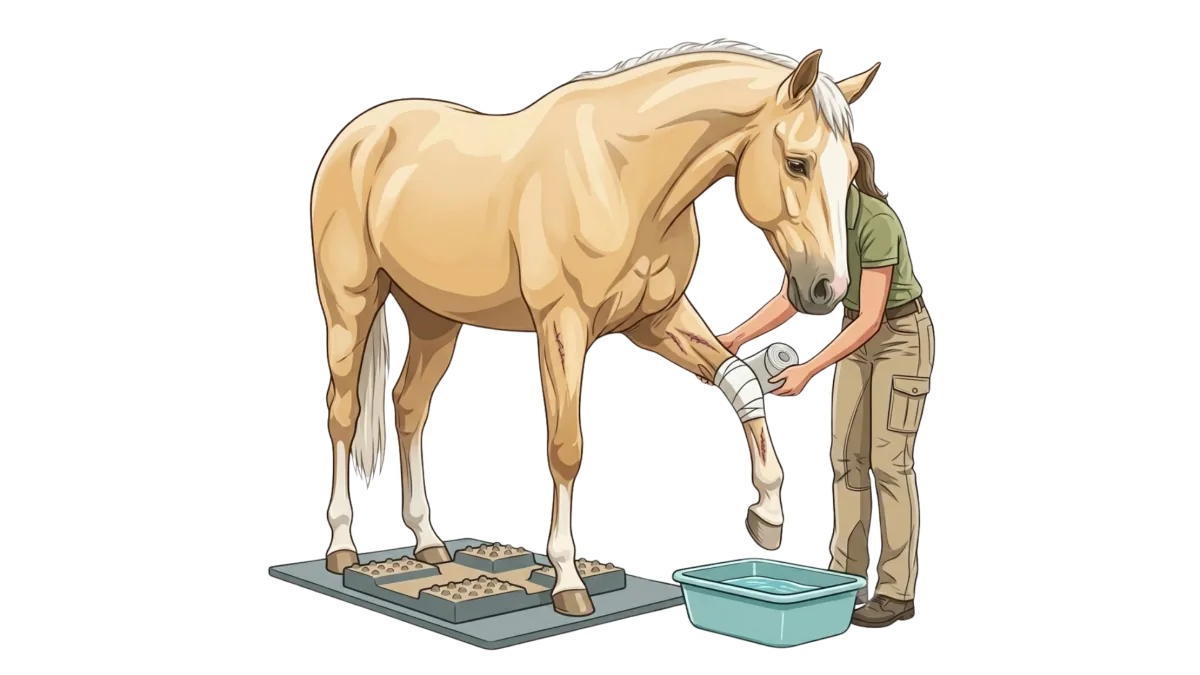
What a systematic view includes
Body state, injury or illness history, diet, daily movement, training, tack, hoof work, living conditions, and specialists are all parts of one picture.
A horse does not recover through one internet exercise. The horse needs a direction that matches the actual state of the body.
This is where many owners get lost: they see the result, but they do not know where to begin. It shows a way of thinking: assess the state, collect history, find mistakes, remove causes, and only then build the work.
Teamwork matters
The cases repeat one idea: the best changes happen when the owner, groom, trainer, veterinarian, rehabilitation specialist, and farrier move in the same direction.
That matters even more after injuries and chronic states. One specialist can do their part well, but if daily routine, training, or hooves keep pulling the body back, the result may only be temporary.
Rehabilitation is not one session or one trick. It is a daily support system built on routine, clarity, consistency, and respect for the body’s limits.