Horse Massage: When It Is Safe and When It Is Not
Massage can be part of caring for a horse’s body. In this approach, it is not “press where it hurts”; it is attentive hands-on work with boundaries, reactions, and clear contraindications.
- Massage does not replace veterinary diagnosis and needs to match the individual horse’s state.
- The horse’s reaction matters more than finishing a session because it shows the boundary.
Massage is not a universal answer
If a horse is tense, that does not automatically mean massage should start. First, it matters whether there is an acute issue, strong pain, inflammation, or a condition where hands-on work would be unsuitable.
This is not dry caution; it is respect for the horse’s body.
The principle matters here: massage should match the horse’s state, not only the owner’s wish to help with their hands.
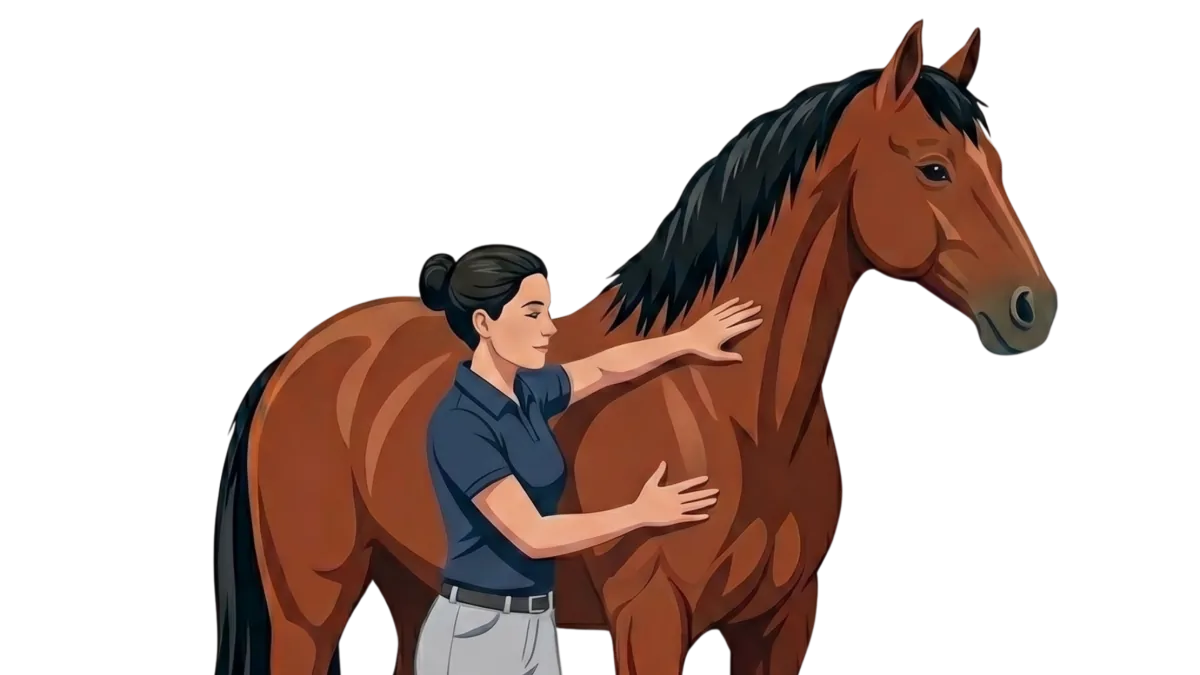
The horse’s reaction is the guide
A horse may show discomfort through tension, stepping away, ears, tail, breathing, or freezing. Those signals should not be ignored.
The key principle is softer work, observation, and stopping in time. This is normal work with a living, sensitive system.
If the horse clearly says “no” with the body, that is already an answer.
When to pause and clarify the state
If there is acute injury, a hot painful area, fever, strong unexplained pain, swelling, or an infectious state, a specialist comes first.
Massage should not be used “just to see if it helps” when the reason for pain is unclear. In those moments, stopping early is the more professional choice.
Massage should be part of a system, not a way to avoid diagnosis. The point is not “do something with your hands at any cost”, but to work with the body only where it is appropriate.